Authentic Limewash and Historic Paints in Suffolk: A Guide for Period Properties

The Importance of Limewash and Preserving Suffolk's Architectural Heritage
Preserving Suffolk’s rich architectural heritage requires more than modern paints and quick fixes. From medieval timber-framed cottages in Lavenham and Long Melford to Georgian townhouses in Bury St Edmunds and historic homes in Sudbury and Hadleigh, traditional buildings demand traditional materials. In this guide, Dan Binks of DMB Decorating explains the history, science, and practical benefits of authentic limewash and heritage paints, and why specialist knowledge is essential.
Looking for a specialist decorator? 🔗www.dmbdecorating.co.uk/contact
A Brief History of Paints and Limewash in Suffolk
For centuries, Suffolk’s buildings were protected and decorated using locally available materials. Before the industrial era, paint was not a factory product but a handcrafted mixture based on:
- Lime (from burnt limestone)
- Water
- Natural earth pigments
- Animal glues, casein, or oils (in some finishes)
Limewash was the most widespread finish for external and internal walls from the medieval period through to the 19th century. It was breathable, inexpensive, and ideally suited to timber-framed and solid-wall construction.
In towns such as Lavenham and Long Melford, once wealthy centres of the wool trade, limewash was frequently refreshed, reflecting both prosperity and pride in appearance.
Traditional Pigments and Historic Limewash Colours
Early Limewash Colours:
Historic Suffolk colours were derived from natural sources:
- Chalk and lime: soft whites and creams
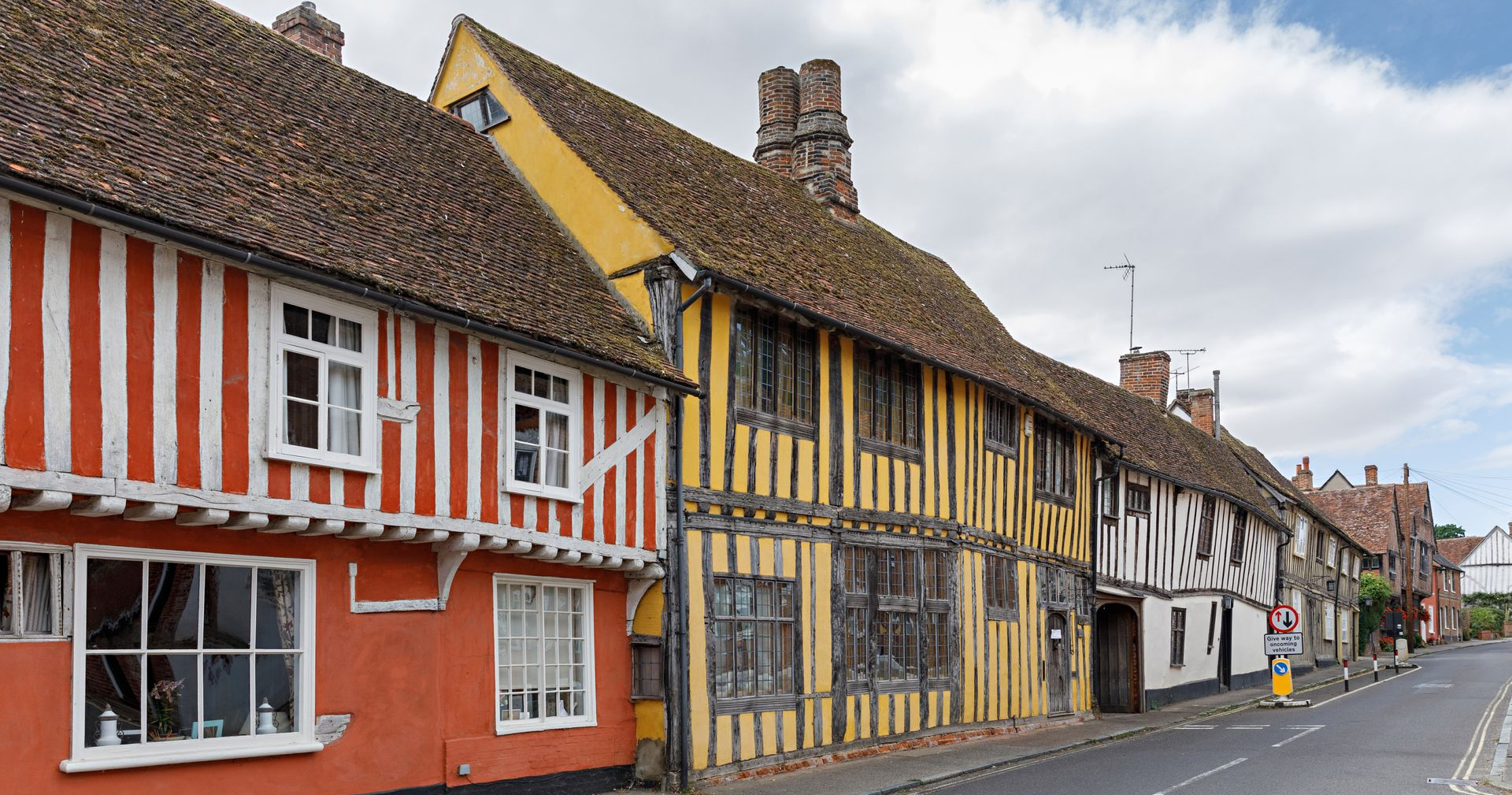
- Ochres: yellows, buffs, and warm browns
- Iron oxides: reds and deep browns
- Carbon black: greys and blacks
- Copper compounds: limited greens
These pigments were mixed directly into limewash, producing subtle, matt finishes that changed gently with light and weather.
The Myth vs. Reality:
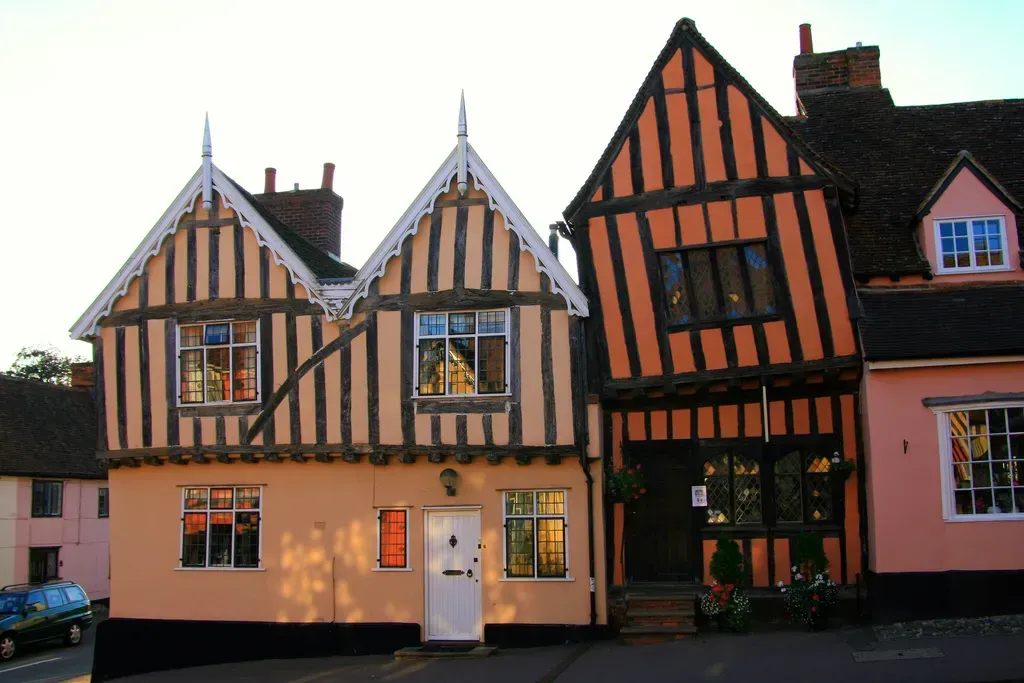
While many believe pig's blood was the sole, direct cause of the pink color, it was historically used to thicken the limewash and act as a binder to add protection to the timber frames.
The pink, ranging from pale to red, was primarily achieved by adding red ochre (iron oxide), and to a lesser extent berries like sloe and elderberry, to the lime mixture.
Regional Limewash Colour Variation in Suffolk:
Different parts of Suffolk, and surrounding areas, developed distinct colour traditions due to soil types, wealth, and local industries.
Local clay and mineral deposits influenced available pigments, giving Suffolk buildings a recognisable regional character.
Later on this became more of a fashion and a local identity.
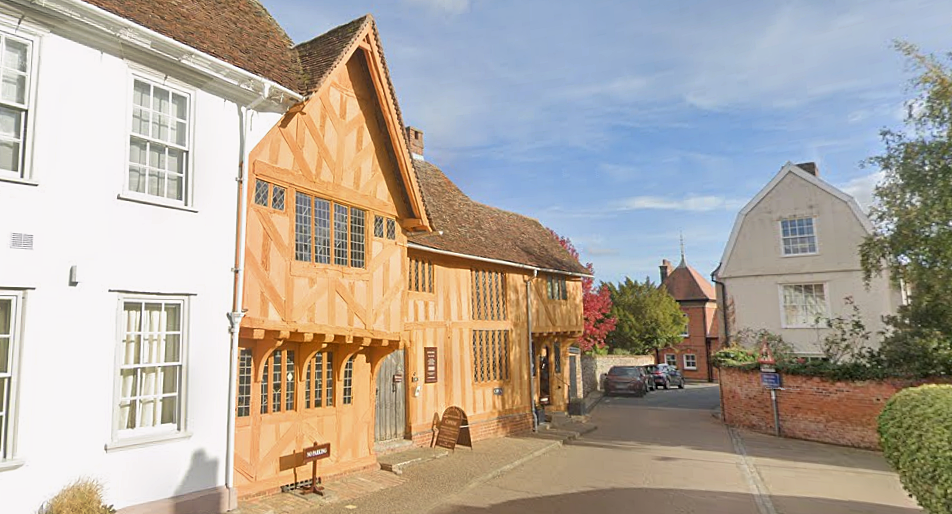
Rural Suffolk towns and villages like Sudbury, Lavenham, Hadleigh and Long Melford were extremely prosperous due to the wool trade. Towns and villages grew quickly at the same time so followed the same structural designs and colour schemes.
Common colours were rich ochres, pinks, and soft or deeper reds; more coastal areas often had paler lime creams and whites for practicality
Economic Downturn Preserved Them:
When the woolen industry declined in the late 16th century, these towns could not afford to modernize their buildings, allowing their impressive, original medieval, and Tudor architecture and colours to remain largely intact.
While most of these towns fell into deep poverty when the wool trade collapsed in the late 16th century due to competition and changing fashions, Sudbury adapted by transitioning into silk weaving. This meant that they could afford to either rebuild new properties or build refaced facades to front their existing buildings. Refaced facades became common in the 16th–17th centuries, when wealthy merchants wanted to update old medieval houses to contemporary fashions. Brick and stone replaced the half timbred, wattle-and-daub fronts, so the traditional look changed.

How Suffolk Compared with the Rest of England
While limewash was common nationwide, Suffolk showed several distinctive trends:
- Earlier adoption of decorative colour due to wool wealth
- Greater use of warm earth pigments than northern regions
- Longer retention of lime finishes compared with urban centres
- Strong preservation of medieval and Tudor colour traditions
In contrast, industrial cities adopted oil and later acrylic paints much earlier, leading to less breathable and less sympathetic finishes.
The Science Behind Limewash for Period Properties
Limewash works through a process called carbonation. When applied, calcium hydroxide reacts with carbon dioxide in the air to form calcium carbonate, effectively becoming part of the wall surface.
This creates:
- Exceptional breathability
- Moisture regulation
- Resistance to mould and bacteria
- A self-healing microstructure
For Suffolk’s traditional timber-frame and solid masonry buildings, this breathability is essential to prevent damp and decay.
Application Methods Used by Suffolk Limewash Specialists
Authentic limewash must be applied correctly to perform properly.
Professional Surface Preparation:
- Removal of cement and modern paints
- Gentle cleaning (no aggressive blasting)
- Repair with lime mortars and plasters
- Correct moisture conditioning
Traditional Application Techniques:
- Multiple thin coats (typically 3–6)
- Brushed by hand, not rolled
- Applied in suitable weather conditions
- Cured slowly, protected from sun and frost
Incorrect preparation is the main cause of limewash failure and premature deterioration.
Costs, Durability, and Maintenance of Limewash
Costs:
Limewash is generally more labour-intensive than modern paints. While material costs are modest, skilled application increases overall investment.
However, long-term value is significant!
Durability:
- External limewash: 3–7 years depending on exposure
- Internal limewash: 10+ years
- Easily renewed without stripping
Unlike modern paints, limewash ages gracefully rather than peeling.
Ongoing Maintenance:
Routine re-coating is straightforward and avoids costly surface repairs.
Environmental Benefits of Traditional Lime Paints
Limewash is one of the most environmentally responsible finishes available:
- Low embodied carbon
- Carbon-absorbing curing process
- No plastic content
- Minimal VOC emissions
- Biodegradable ingredients
For environmentally conscious property owners in Suffolk, limewash aligns with sustainable building principles.
Historic Accuracy and Conservation Standards
Using inappropriate modern paints can cause long-term damage to historic fabric. Conservation bodies and local planning authorities in Suffolk frequently specify lime-based finishes.
Benefits of authentic materials include:
- Compliance with listed building regulations
- Preservation of original fabric
- Improved building longevity
- Enhanced property value
Modern acrylic paints trap moisture, accelerating timber rot and masonry decay.
Changing Architectural Paint Fashions in Suffolk
Medieval to Tudor
Bright ochres, reds, and lime whites
Georgian Period
Restrained stone colours, greys, and pastels
Victorian Era
Stronger pigments, early industrial paints
20th Century
Widespread use of synthetic coatings
Modern Conservation Movement
Renewed appreciation for traditional finishes and heritage craftsmanship
Today, homeowners in Sudbury, Lavenham, Bury St Edmunds, and surrounding villages are increasingly returning to authentic materials.
Why Choose a Specialist Listed Building Painters in Suffolk
Historic paintwork requires specialist technical knowledge, experience, and sensitivity.
A specialist decorator understands:
- Traditional substrates
- Moisture behaviour
- Heritage colour palettes
- Conservation best practice
- Listed building requirements
Incorrect preparation or modern shortcuts can cause irreversible damage.
DMB Decorating: Heritage and Limewash Specialists in Suffolk
Dan Binks of DMB Decorating provides professional limewashing and heritage decorating services across Suffolk, including:
- Sudbury
- Lavenham
- Long Melford
- Bury St Edmunds
- Framlingham
- Hadleigh
- Clare
- Woodbridge
- Aldeburgh
Services include listed building painting, timber frame decoration, limewash application, and conservation repainting.
Every project is completed with respect for historic accuracy and long-term performance.
With specialist training and practical experience, DMB Decorating ensures every project respects the building’s history while delivering durable, high-quality finishes.
The Benefits of Choosing Authentic Limewash
- Protects historic fabric
- Enhances visual authenticity
- Improves indoor air quality
- Supports sustainable building
- Meets conservation standards
- Preserves Suffolk’s architectural identity
For period properties, limewash is not a cosmetic choice, it is a structural and conservation investment.
Conclusion
Suffolk’s historic towns and villages represent centuries of craftsmanship, material knowledge, and regional identity. From the medieval streets of Lavenham to the market squares of Sudbury and Bury St Edmunds, limewash has shaped the county’s visual character.
Maintaining this heritage requires skilled professionals, traditional materials, and informed decision-making.
By choosing authentic limewash and a specialist decorator such as Dan Binks of DMB Decorating, property owners protect both their investment and Suffolk’s architectural legacy.
For expert listed building painting and limewashing services in Suffolk, call:
Order request a quotation:
More Commonly Asked Questions About Limewash Paint
Do I need Listed Building Consent or planning permission to limewash a historic timber-framed building?
This is very common for owners of listed or conservation area properties: limewash changes external appearance and often requires consent, though reuse of existing traditional finishes in the same colour/type is usually less likely to need consent.
See the Planning (Listed Buildings and Conservation Areas) Act 1990.
Under this Act, any works that affect the character of a listed building, inside or out, require Listed Building Consent from the local planning authority before they are carried out.
How do I identify if existing finish is limewash?
Owners commonly want to know how to tell if a building’s current finish is limewash.
Identifying an existing limewash finish involves looking for a matt, powdery texture that often shows cloudy, mottled, or watercolor-like variations. Because it is a breathable, mineral-based finish that works by soaking into surfaces rather than sitting on top, it acts differently than modern acrylic or emulsion paint.
To be sure, it is recommended to ask a local expert who wil quickly be able to identify the paint type.
How often should limewashing be reapplied?
Limewash on Suffolk historic buildings typically requires reapplication every 5 to 7 years to maintain both protective and aesthetic qualities.
Due to exposure, coastal or south-facing walls may require more frequent maintenance, often every 3-5 years, as it acts as a breathable, sacrificial layer.
What limewash colour options are traditional or appropriate on Suffolk historic buildings?
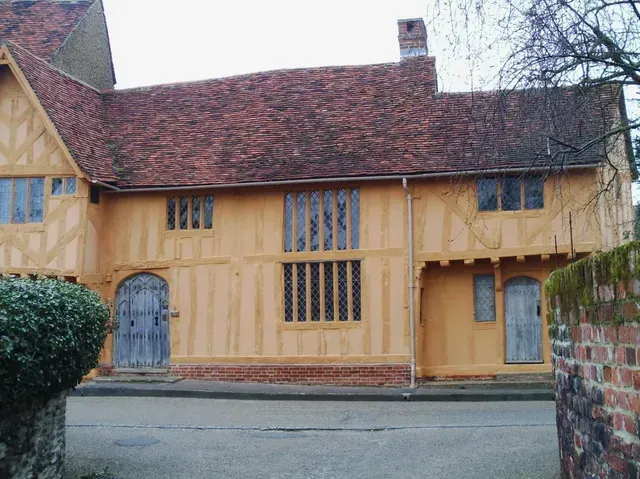
Traditional colours on Suffolk’s historic timber-framed buildings were based on limewash and natural pigments.
The most common were soft white, cream, and pale ochre, with occasional muted pinks and earth reds such as “Suffolk Pink.” These finishes were translucent and weathered naturally.
Timbers were origonally limewashed, but later were left to age naturally or stained dark brown or black.
Overall, authentic schemes used subtle, earthy tones, not bright or modern colours.
What is limewash and how is it different from paint?
Limewash is a traditional finish made from slaked lime and water, sometimes with natural pigments. It bonds with historic surfaces such as lime plaster and masonry to form a breathable, mineral coating.
Unlike modern paint, it does not seal the surface, allowing moisture to evaporate and helping prevent damp and decay. Limewash weathers naturally to a soft, matt finish and needs more regular maintenance, but it remains the preferred option for traditional and listed buildings because it is compatible with historic materials and better for the historic structure.
For a detailed comparison of traditional and modern breathable finishes, see our guide to: Traditional Limewash vs Modern Mineral Paints for Period Properties in Suffolk.